Museum of Polo and Hall of Fame
Museum of Polo and Hall of Fame
Collections
Collections
U.S. Open Polo Championship
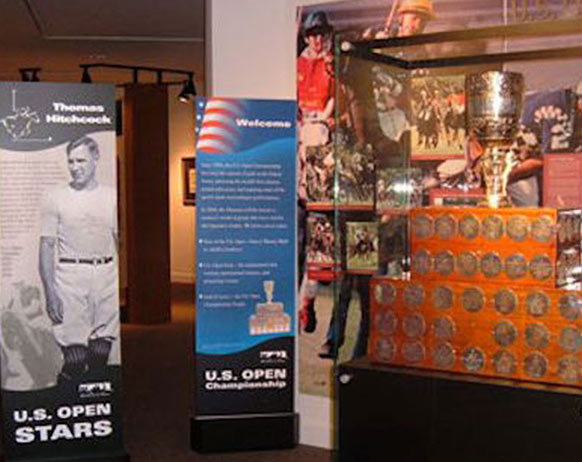
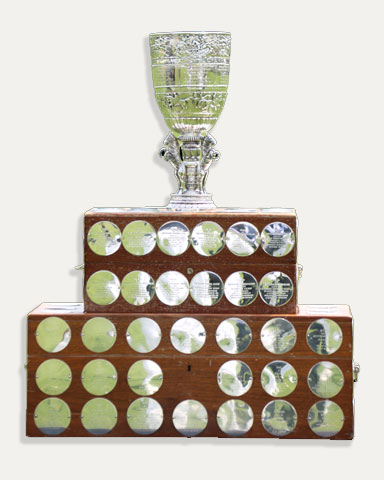
The most prestigious tournament in the United States, the U.S. Open attracts the top players and teams in the world. The Championship is the final leg of the 22-goal tournaments held during the Florida high-goal winter season. The U.S. Open began in 1904 and continues to be played till this day. The U.S. Open Polo Championship is the final tournament, in the Gauntlet of Polo. The most treasured trophy, representing legacy and honor, in the United States.
Collections
USPA Gold Cup
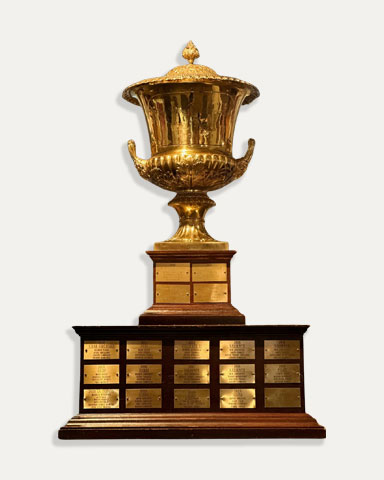
Inaugurated in 1974, at the Oak Brook Polo Club in Illinois, it was originally intended to be competed for by teams of up to 26 goals, now played at the 22-goal level. Today, along with the U.S. Open Championship and the C.V. Whitney, the Gold Cup is considered one of the three gems of the American Gauntlet of Polo.

Collections
The C.V. Whitney
The C.V. Whitney Cup began its history in 1979 as the “U.S. Handicap Cup” awarded to the winning team by handicap at the U.S. Open Polo Championship. Named after Cornelius Vanderbilt “Sonny” Whitney, who was an avid polo player and three-time U.S. Open Polo Champion, Now the C.V. Whitney is its own single- elimination tournament contested for at the 22-goal level. Currently it is part of the Gauntlet of Polo along with the Gold Cup and US Open Polo Championship.
Collections
Gauntlet of Polo
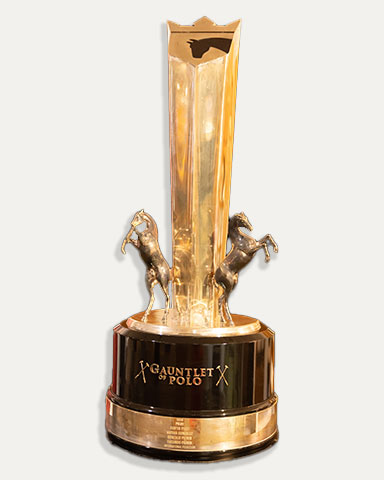
The Gauntlet of Polo is the USPA’s prestigious high-goal polo tournament series fought for by the top players and teams in the United States. Consisting of the three major tournaments in the country; the C.V. Whitney, Gold Cup and U.S. Open Polo Championship. The Gauntlet is only won by achieving victory in all three tournaments. Since its inception the Gauntlet has only been won by the Pilot team in 2019.
Collections
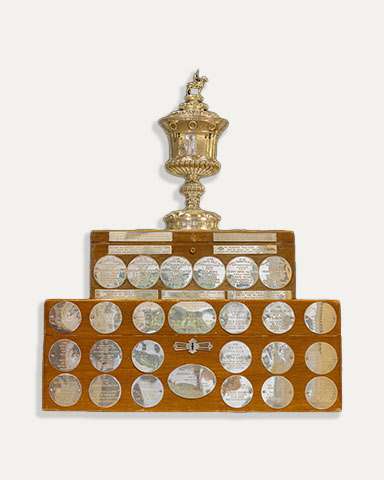
Silver Cup
The Silver Cup is the oldest continuously played polo tournament and one of the most coveted trophies in the United States. Originally called the “Junior Polo Championship” no player could exceed a 5-goal handicap, and no team could exceed 20-goals on handicap. Presently, the tournament is played at Santa Barbara Polo Club in California and is competed for at the 16-20 goal level.

Collections
1909 Westchester Cup Individual Award
This Tiffany & Co. trophy was presented in 1909 to members of the legendary Big Four, the first American team to win the international Westchester Cup. Commissioned by team captain Harry Payne Whitney, the awards were gifted to his teammates in recognition of their historic victory. The Big Four also inspired the design of the Museum’s logo. This trophy is on permanent loan from Mr. and Mrs. C.V. Whitney.
Collections
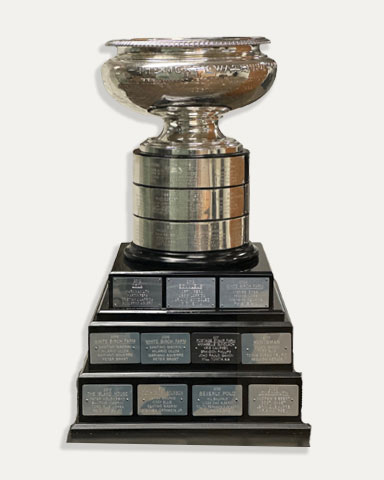
Monty Waterbury
A tournament held in remembrance of 10-goaler James Montaudevert “Monty” Waterbury. Monty Earned a 10-goal handicap in 1902, won the first U.S. Open in 1904, and as one of the Big Four, won the Westchester Cup in 1909, 1911, and 1913. In 1920 Waterbury suddenly passed away at 44 years old. As a memorial, it was proposed an annual tournament be played for a silver trophy. The first cup took place at Meadowbrook in 1922.

Collections
Remington Bronze
Created by renowned American artist and sculptor Frederic Remington (1861–1909), this bronze is a striking depiction of the Sport of Kings in motion. Best known for capturing the spirit of the late 19th-century American West, Remington rarely strayed from Western themes making this piece exceptionally rare. Cast in 1904 by Roman Bronze Works in New York using the lost-wax casting method, it is one of only two known versions of its kind.
Collections
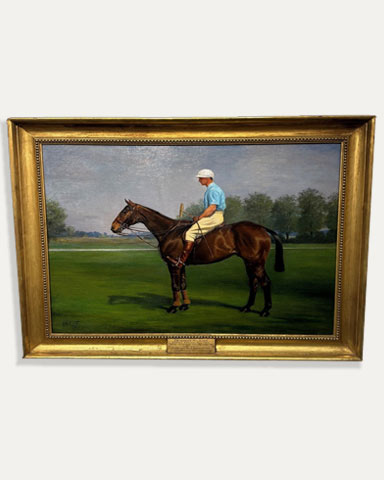
Franklin Brooke Voss ``Dev Milburn on Jacobs``
One of the star ponies of the American Team playing in the Westchester Cup in 1913, Jacobs had formerly been the property of Harry Payne Whitney but was presented, with five others, to Devereux Milburn as a wedding present. The raw boned, rangy Texas- bred thoroughbred, standing at 15.3 hands, was the largest and fastest pony of the string.
Milburn played Jacobs for periods in the 1913 matches. He was called upon again for the internationals in 1914. Afterward Jacobs continued to carry Milburn in high class polo for ten years, played with distinction even as an aged horse, “as fast as ever played a game.”
Museum archival documents revealed that the United States Polo Association made a motion to commission the Artist, Frank Voss, to paint the portrait of Milburn Jacobs and have it “presented to Mr. Milburn as a mark of the Associations appreciation of his having acted as Captain of the International Team Which won the Cup in 1921” Donated by Estate of Devereux Milburn.

Collections
Paul Brown
Paul Brown-Paul Desmond Brown (1893-1958) was a famed and respected illustrator and artist of equestrian sports. This unique sample of his work dates from 1935, when it was created for the wall of the Pegasus Polo Club in Rockleigh, New Jersey. His work was photographed and mounted on cloth paper. As the paper was placed on the wall, Mr. Brown embellished each illustration by hand and added subtle color. In 1943, the building was converted for use by wartime industry, and the art was removed. The Museum is grateful to Daniel W. Colhoun, who contributed this work, and whose father saved the original mural.
Collections
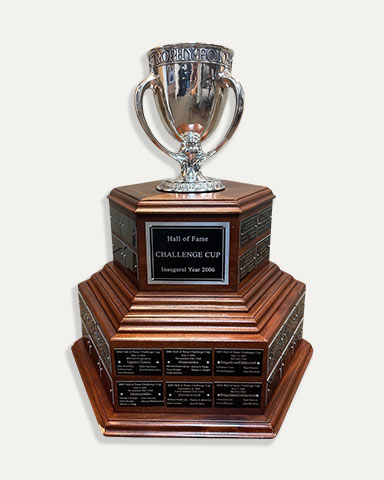
Hall of Fame Challenge Cup
The Gorham Sterling Silver Cup was originally awarded as the Polo Pony Races Challenge Trophy circa 1909. One of the Museum’s founders, and his wife, Mr. & Mrs. Leverett Miller donated the cup that was then repurposed in 2006 as the Hall of Fame Challenge Cup.
This Tournament was established to honor the heritage of the sport and promote the Museum of Polo and Hall of fame. Any Club can apply to host the Hall of Fame Cup.
Collections
First trophy for pairs 1884
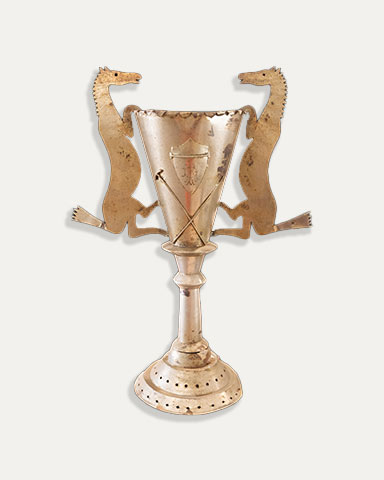
The “Holy Grail” of polo trophies it is a whimsical example of handmade American folk art and thought to be the earliest American polo trophy – even before the prestigious Silver Cup which began in 1900. In August of 2009 it was donated to the Museum by Mary Rumsey, daughter in law of Polo Hall of Famer Charles Rumsey Jr. This trophy is made of tin in the form of an inverted funnel mounted on a slopped round bass with diamond piercing on the lowest band and round piercing on the band above, the whole flanked by two rising horses.
Visit the Polo Museum
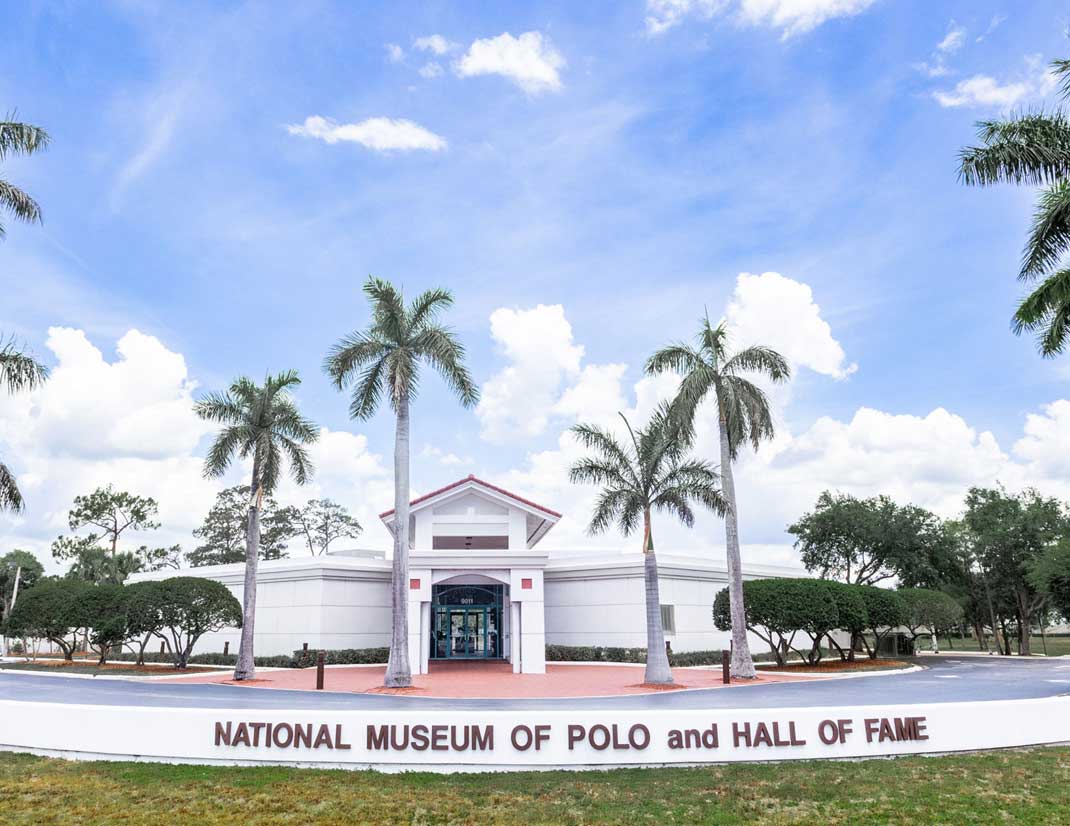
The Museum of Polo and Hall of Fame is a non-profit educational organization in Lake Worth, Florida, dedicated to fostering an appreciation of the sport, its history, development, and traditions by acquiring, preserving, exhibiting, and interpreting collections, as well as honoring those who have made outstanding contributions to the sport.